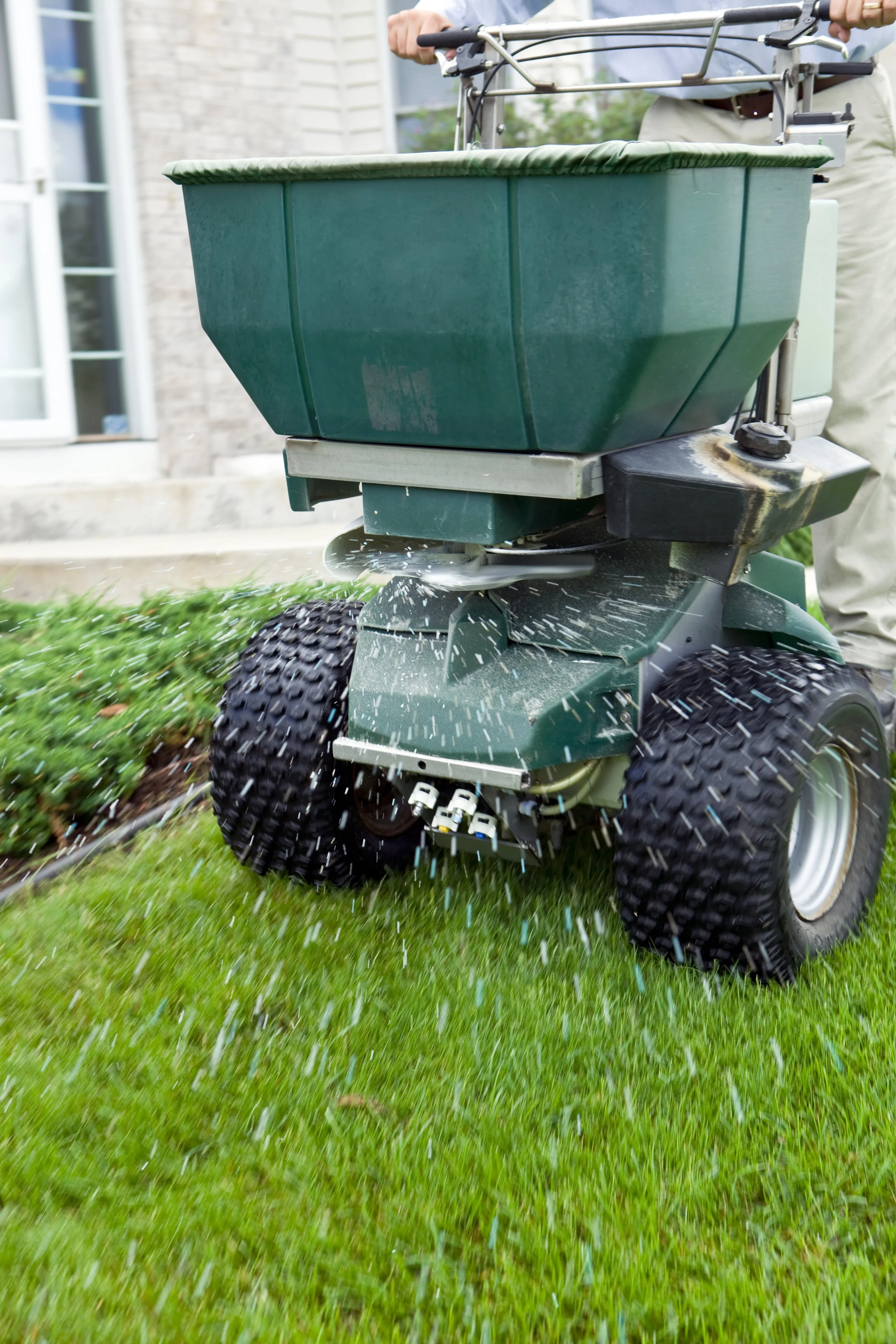
Fertilization
Fertilizing your lawn supplies essential nutrients—primarily nitrogen (N), phosphorus (P), and potassium (K)—that turfgrass needs to grow dense, deep-rooted, and resilient. These macronutrients each play distinct roles: nitrogen drives leaf growth and green color; phosphorus supports root development and establishment; potassium improves stress tolerance (drought, cold, disease). Without proper fertilization, lawns become thin and weak, leaving open space for weeds, increasing susceptibility to diseases and insect damage, and reducing recovery from wear. Thin, nutrient-poor turf also struggles during drought, compacts more easily, and offers poorer curb appeal, which all contribute to higher long-term maintenance costs.
Seasonally timed, regular fertilization improves color and vigor and speeds recovery from foot traffic and minor injury. A balanced program strengthens root systems so grass can access water and nutrients more efficiently, which reduces the need for frequent watering and helps turf survive dry periods. Proper fertilization also supports soil microbial activity—microbes that decompose organic matter, cycle nutrients, and build soil structure—so the lawn’s ecosystem becomes more productive and self-sustaining.
When fertilizer is matched to soil needs (based on soil testing) and applied at appropriate rates and times, nutrient uptake is efficient and runoff or leaching is minimized, protecting local waterways. Combining fertilization with best-management practices—proper mowing height and frequency, rational irrigation schedules, periodic core aeration to relieve compaction and improve root-zone oxygenation, and targeted pest/disease control—creates a healthier, more resilient lawn. Over time this integrated approach reduces reliance on corrective chemical applications, preserves soil structure and fertility, and delivers a lush, durable turf that looks great and performs well with lower environmental impact.